
Colorized Finnish War History
Jhlcolorizing specializes in colorizing historical photographs, particularly those related to war history. Black and white images of the past are brought to life with a precise, respectful, and artistic approach, preserving the spirit and details of the original era. War photographs tell stories that deserve to be seen in a new light. Colorized historical images bring people, moments, and events closer to the present day in a visually striking manner.
In my own way, I try to do heritage work that will hopefully help current and future generations understand how, why, and with what sacrifices independent and free Finland has been defended.
- Jussi Luostarinen -

Limited selection of products available
High-quality mugs and other products featuring military history images, in the JHLCOLORIZING style.
Order products from the Redbubble store and bring Finnish military history into everyday life. All products are made to order.
Some products may be marked on Redbubble as “Mature content”, for example if the images contain weapons or other more sensitive material. This only affects visibility and does not prevent ordering.
Products can also be inquired via the contact form or email. In such cases, we can place the order and have the product delivered to the customer for an additional fee.
Services
Commissions
Commissions for companies and private individuals.
Commercial Cooperation
Commercial cooperation & social media visibility
Colorization Work
Bring old memories to life – colorizing black and white photos.
Book Cover Design
A book cover sells – and tells a story before the first page.

Products
Explore the products
Logos & Graphics
Graphic design & digital solutions
Info
HOW IT ALL STARTED FOR ME
In 2017, I saw colorized photos from the Second World War on social media, and they made a profound impression on me. I decided to try colorizing myself, and after several hours of work, my first piece was created: Viipuri Castle. At the time, I was quite satisfied with the result, although looking back, it wasn't very spectacular. However, my own skills have improved day by day, the quality of the work has improved, and learning new colorization techniques has kept the hobby meaningful.

I STRIVE FOR REALISM IN MY WORK
Digital post-colorization of images may take several hours or even days, depending on the details of the images. What is fascinating about this work is that you get into the middle of the image's events, and at the same time, details hidden in the black and white image emerge, and the colorized image gets a new life. In colorization, the black and white image is corrected and colored digitally using various image processing programs. Colorizing, or in this case, digital painting, is detailed handwork and requires extensive background research. Colorization always involves some degree of interpretation. I strive for **realism**, not color splendor, in my work, so the best result is a colorization that feels as authentic as possible – not an artwork.

HUNDREDS OF PHOTOS AND THE FIRST EXHIBITION
I have published hundreds of photos on social media, including Facebook and Instagram, and gained thousands of followers, contacts, and friends all over the world. In addition to social media publications, I have done commissioned work for private individuals and colorized photos for books and magazines. My biggest work so far was colorizing all the images for Ilkka Enkenberg's book *Talvisota väreissä* (Winter War in Color). At the end of 2021, I organized the *War History in Color* exhibition in Helsinki, which featured post-colorized images from the beginning of the Winter War to the final days of the Continuation War. The exhibition was a success.
HISTORY OF COLORIZATION
Colorizing photographs was popular immediately after the invention of photography until the mid-20th century, when color photography techniques became widespread. Portraits and landscape photos were particularly colorized, as were photographic postcards.

MEDAL OF MERIT OF THE WAR VETERANS FEDERATION
In 2021, I was awarded the Medal of Merit of the War Veterans Federation, which can be granted to a person who has worked long and meritoriously or otherwise significantly for the goals of the war veteran work.

"Jussi Luostarinen does original heritage work on his social media channels with post-colorized images from the SA-Photo Archive and related stories. In this way, he has helped to bring and keep war history alive and arouse interest in the subject in entirely new audiences. With his work, Luostarinen has succeeded in reaching a following of tens of thousands of people, which is in a class of its own among social media operators in the field of war history. His work offers an excellent example to the entire field of heritage work on utilizing the possibilities of social media, especially in heritage work that appeals to younger generations."-The War Veterans Federation-


War History Quizzes
Challenge yourself with quizzes on Finland’s military history. Click a card to begin your mission.
WAR QUIZ I
Steel Meets Fire – The Armored Warfare Quiz
WAR QUIZ II
Test your skills in a challenging Winter War Quiz
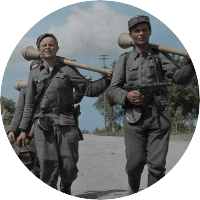
WAR QUIZ III
Deepen your knowledge of Finnish war history
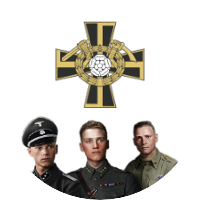
WAR QUIZ – Lauri Törni
Test your knowledge of Lauri Törni and his military career
MORE QUIZZES COMING SOON
Stay tuned for new war history quizzes!
Contact Us
Do you have a question or want more information?
Gallery
The gallery will be updated soon – colorized war historical photographs will be added here.
Finnish war history comes alive – follow my channels!